Memories of Religion in Mt. Zion
by Bruce Boyer
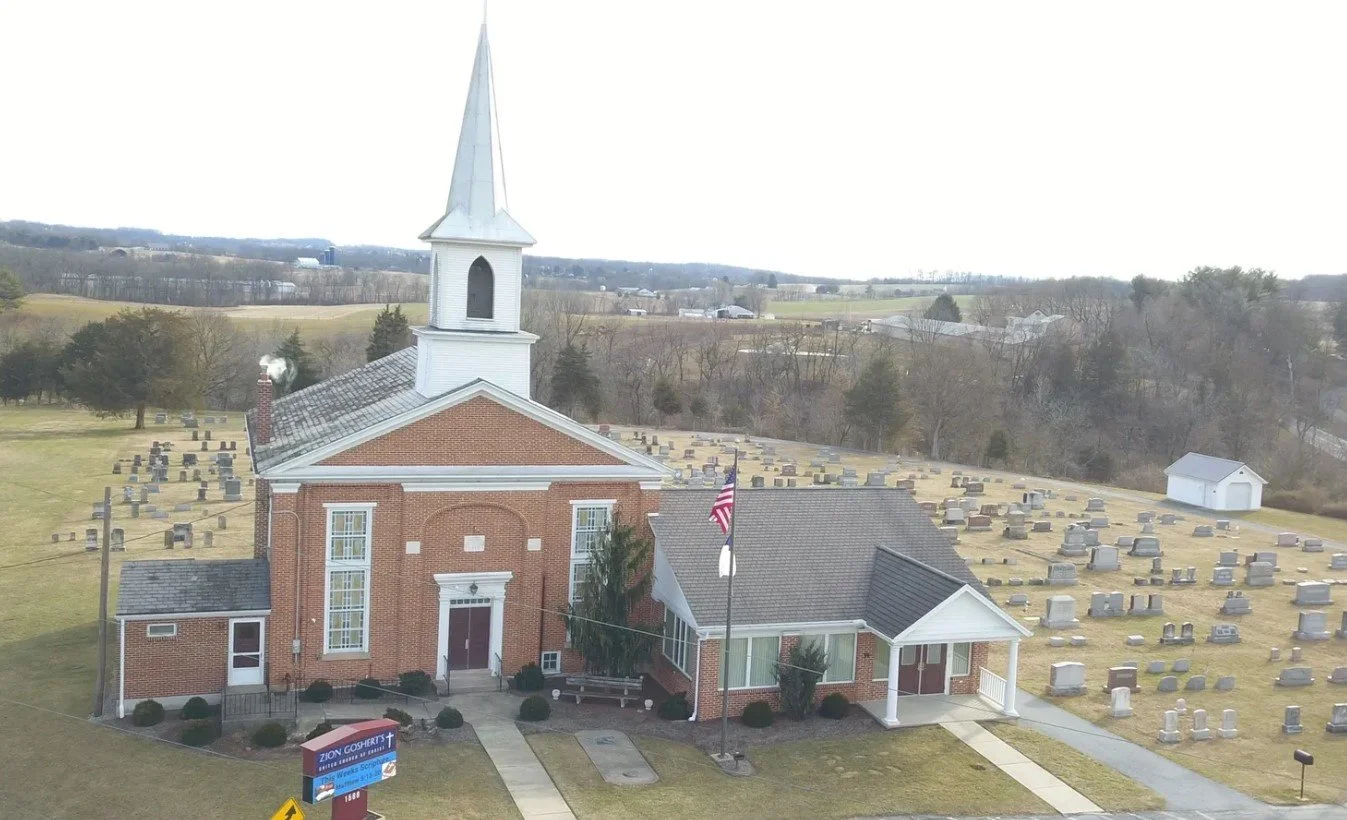
Zion Gosherts UCC
Mt. Zion, PA
Picture from church website, January 2026
https://ziongosherts.org/
In the early 1950s when I was a mere lad of 10 or so, there were four congregations within the two churches in the hamlet of Mt. Zion (in Bethel Township, Lebanon, PA): the upper church, often referred to as Goshert’s (not sure why) had both a Lutheran and a Reformed congregation; and the lower church called Zoar’s likewise had a Lutheran congregation and a separate Reformed congregation. Some years later the two Lutheran congregations consolidated into one congregation in the Zoar church, and the two Reformed congregations consolidated into a single congregation in the Goshert church. So much religion for two churches and such a tiny little hamlet.
While these two churches were in Mt. Zion proper, there were numerous other churches dotting the landscape just outside of Mt. Zion. These were mostly Brethern and Mennonite churches and were typically smaller and less imposing than were Goshert’s and Zoar’s—many without steeples and almost indistinguishable from other rural buildings. And then, of course, there were the Amish who generally conducted worship services in their own homes.
In short, there were seemingly no residents of the area in and around Mt. Zion for whom religion was not a key element of daily life. This was quite obvious in the case of the Amish, who famously forswore modern conveniences such as cars and electricity in order to live a more pious life. (Notably when an Amish family moved into the farm just north of where I grew up, they were said to have pulled out all the electrical wiring from the main farmhouse and the surrounding farm structures.) And while Brethern and Mennonites, permitted cars and electricity, they often dressed in distinctly modest apparel (especially women)—and sometimes would only drive cars that were black and not showy. Also, Brethern and Mennonite women at the time would wear long plain dresses and gauze prayer caps. And some Mennonite families, in an effort to be “plain,” would paint out virtually all the showy chrome on their cars with black paint—giving rise to the moniker “Black Bumper Mennonites.”
However, even Lutheran and Reformed congregations were not immune to the religious currents of the times and the area. Lutheran and Reformed Sunday school classes would discuss state and local “blue” laws prohibiting commercial activities on the Sabbath and would go on at length about how to avoid doing anything that could be considered “work” on a Sunday. Also, as I recall, the Zoar Lutheran pastor was occasionally criticized for having a bright red classy Buick! In addition, churches offered a very full slate of activities for their congregants. There were classes for teens to be confirmed into the congregation, Easter sunrise services, mid-week church services during Lent, and Christmas pageants featuring the congregational children—not to mention baptisms, confirmations, church social functions (often conducted in the church basement or in a nearby picnic grove), and funeral services.
Mary Boyer
My cousin and I always adored our Aunt Mary!
Almost everyone I knew in the area would routinely go to Sunday services, and then on to family “dinners”— midday meals which were often attended by members of the extended family after church services and Sunday school obligations were completed. I specifically recall that well into our early teens a cousin and I who thought we were going to become pastors would conduct “church services” on Sunday afternoons for our parents and our aunts and uncles, who as it turned out were always unruly congregants. Our younger siblings were pressed into being acolytes and choir members. My cousin and I took turns at giving the sermon. I am sure we must have been insufferable!
Not that all kids in Mt. Zion were having faux church services. Far from it. However, it does show how religion permeated itself into daily life, even in rather mainstream churches. My Aunt Mary (my dad’s older sister), one of the unruly congregants, famously quipped that my cousin and I would probably become thieves, not preachers! She was partly right. Neither of us became preachers, though we both continue to feel the early imprint of religion in our lives to this day.